

 简体中文
简体中文 
Services & Logistics Info
Customized Packaging
Customized
Logo/Graphic Customization
Customized
Warranty Period
1 year
Warranty Period for Core Components
1 year
After-Sales Service System
Online support
Sales Unit
Set
Outer Packaging Material
Wooden Case
Single Carton Dimensions
1000*1000*1800mm
Gross Weight per Batch
600kg
Delivery Time
15 working days
Model
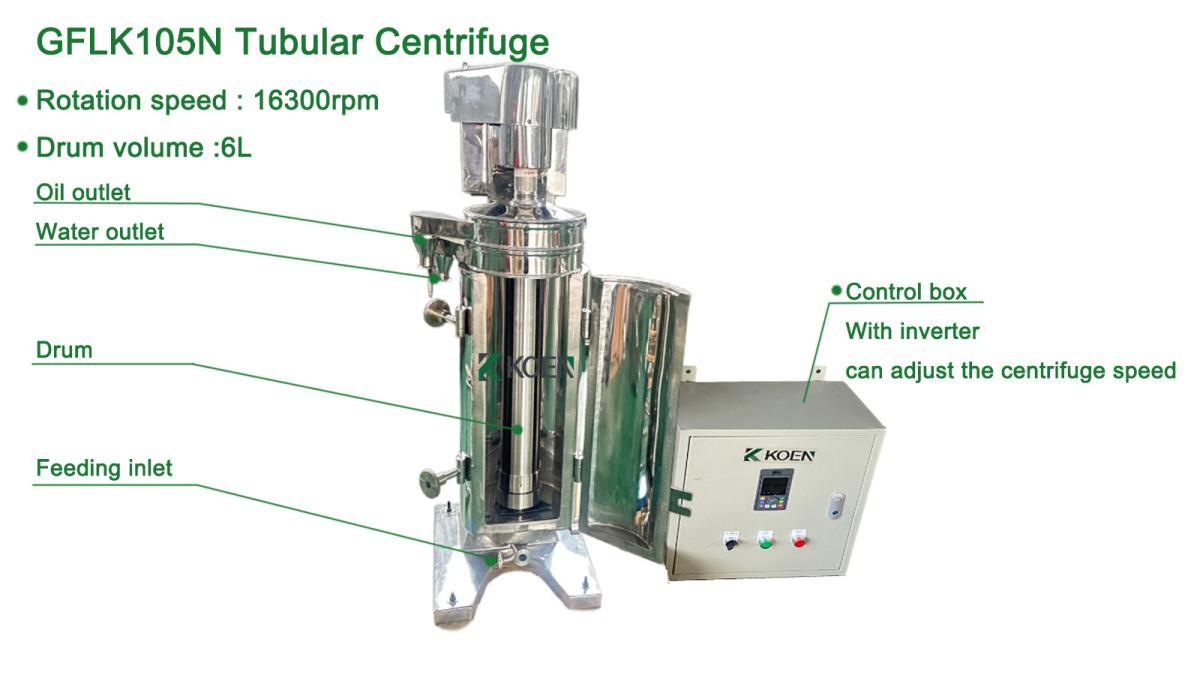
GF105
Bowl Diameter
105mm
Treat capacity
50-500L/H
Rotor volume
6L
Max speed
16300rpm
Centrifugal force
16750G
Product Application
Animal and vegetable oil industry: Dehydration and deslagging of various crude vegetable oil and animal fat, effectively removing free water and suspended impurities to improve oil purity.
Essential oil and spice industry: Oil‑water separation for plant essential oil emulsion and spice extract, removing fine solid particles and solving liquid turbidity problems.
Biopharmaceutical industry: Stratification and purification of fermentation extract and biological liquid, realizing oil‑water phase separation and removing trace solid impurities.
Fine chemical industry: Purification of various industrial emulsions and solvent mixtures, completing liquid‑liquid separation and solid residue removal to improve liquid cleanliness.
Essential oil and spice industry: Oil‑water separation for plant essential oil emulsion and spice extract, removing fine solid particles and solving liquid turbidity problems.
Biopharmaceutical industry: Stratification and purification of fermentation extract and biological liquid, realizing oil‑water phase separation and removing trace solid impurities.
Fine chemical industry: Purification of various industrial emulsions and solvent mixtures, completing liquid‑liquid separation and solid residue removal to improve liquid cleanliness.
Product Information
Flow chart
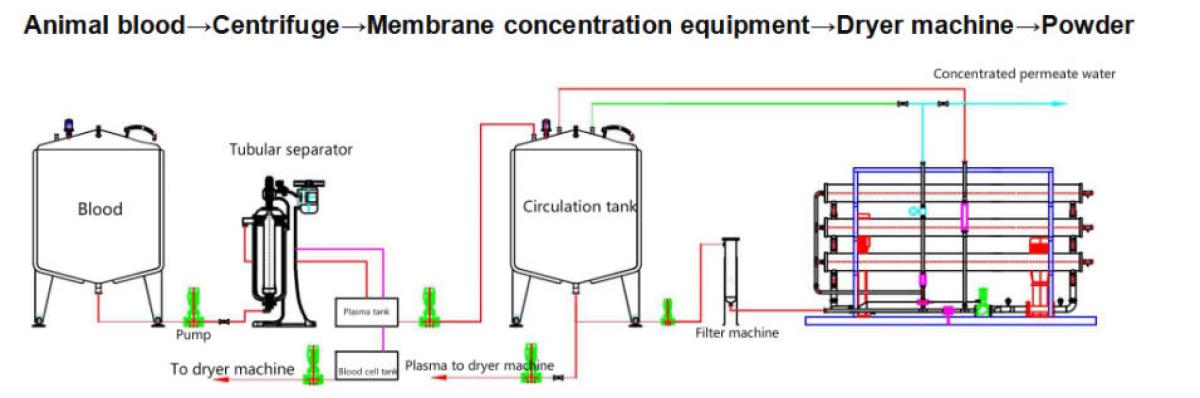
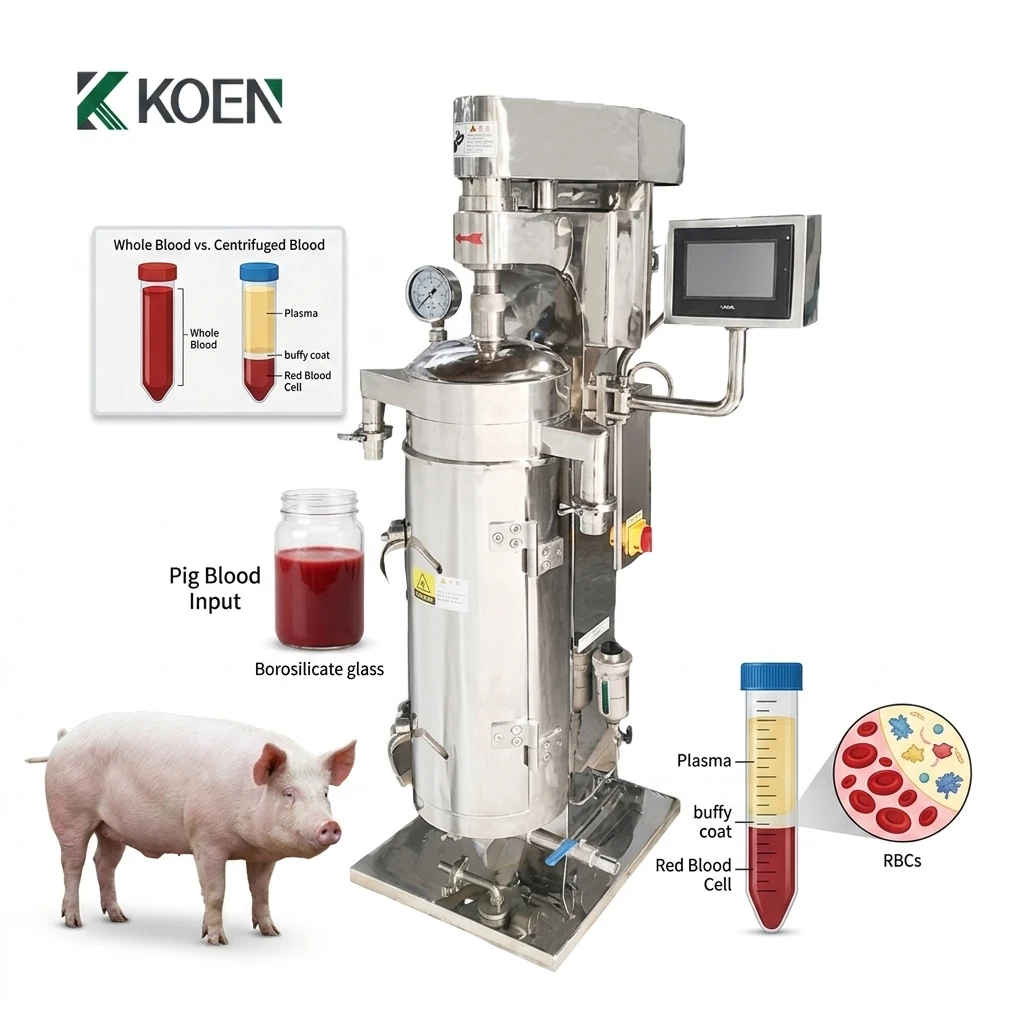
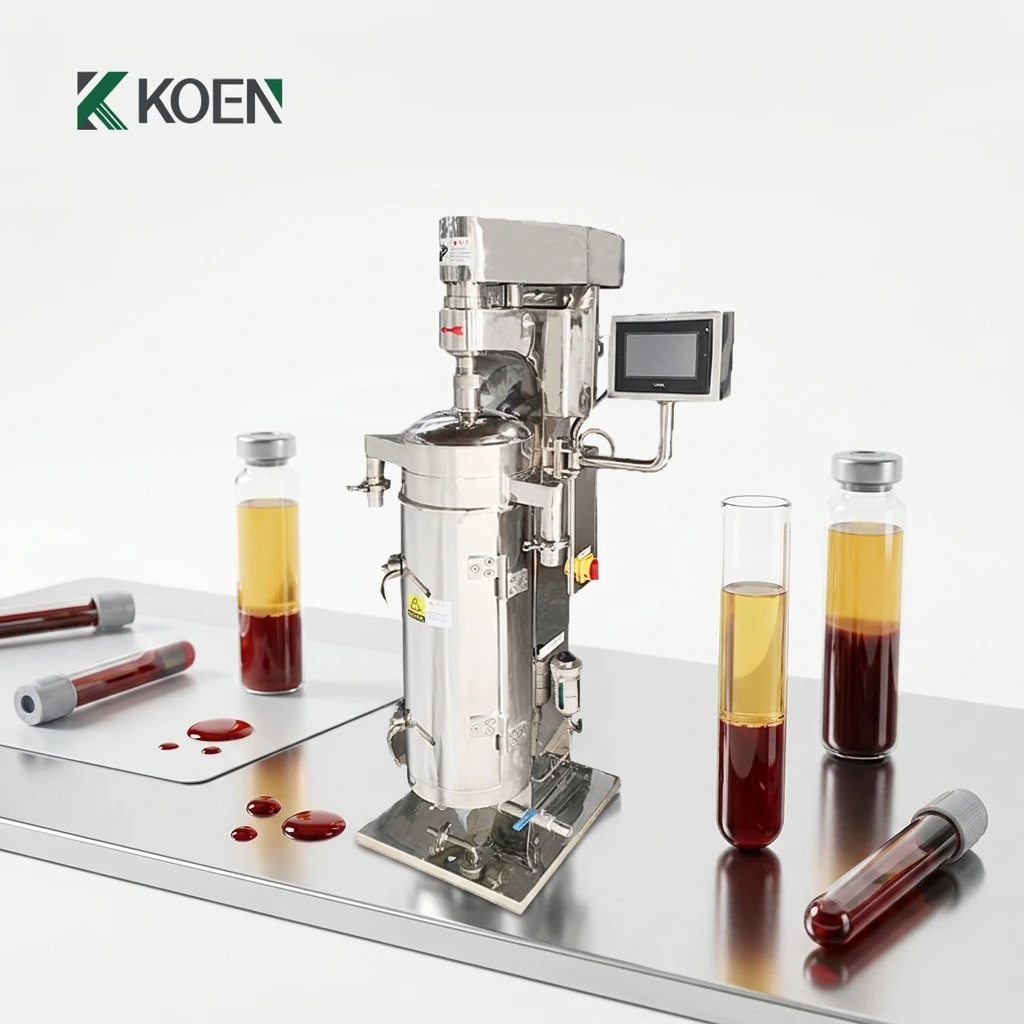
Blood tubular centrifuge
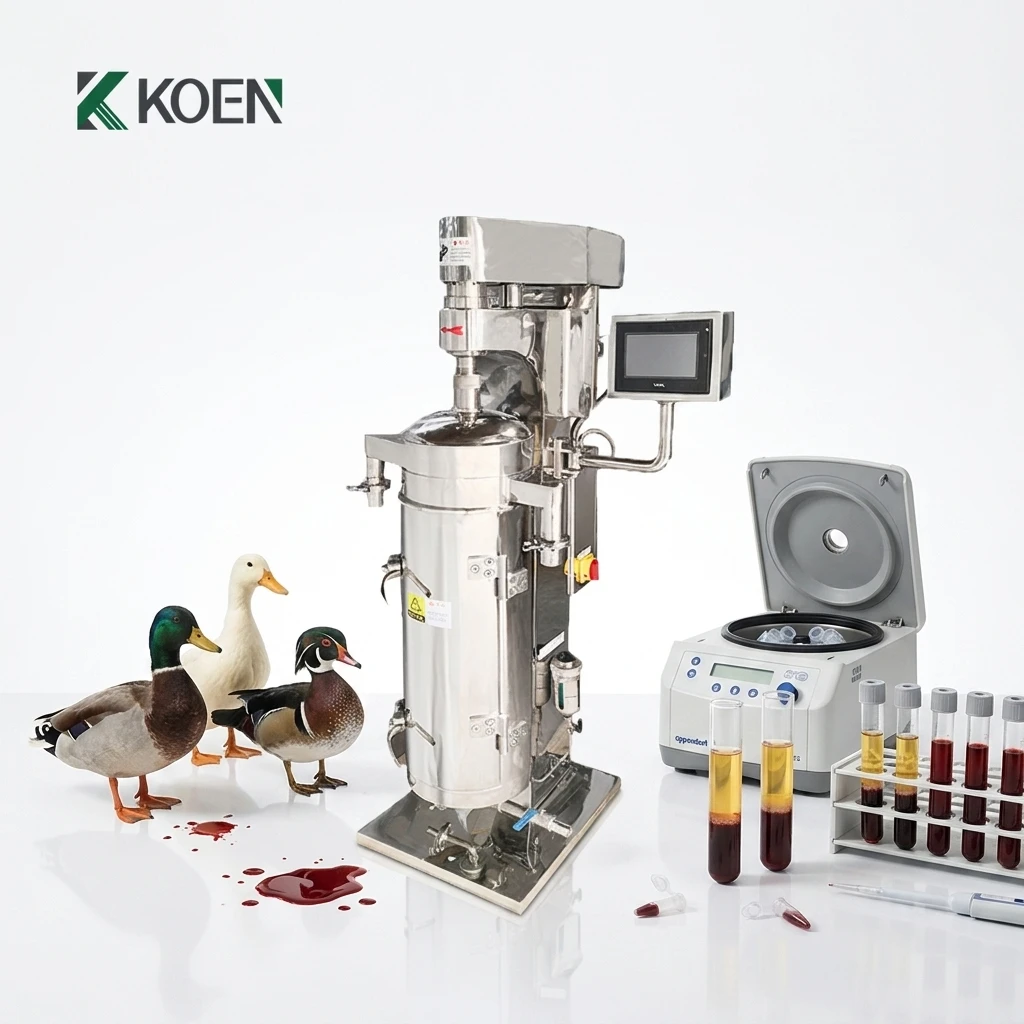
GF105 Blood Separator Centrifuge is our patented product. It is widely used for separating plasma and blood cells from humans, pigs, cows, cattle, sheep, chickens and other animals.
Its main advantages are high processing capacity and minimal blood cell breakage rate. All material-wetted parts of the centrifuge are made of stainless steel, which meets the production requirements of the pharmaceutical industry.
Blood contains abundant proteins and amino acids. Metal ions such as iron and calcium in blood are mostly bound to proteins or other organic substances, making them easy for human absorption. Through the processes of separation, purification, cracking and enzymatic hydrolysis of animal blood, manufacturers can develop bioactive compound products.
Its main advantages are high processing capacity and minimal blood cell breakage rate. All material-wetted parts of the centrifuge are made of stainless steel, which meets the production requirements of the pharmaceutical industry.
Blood contains abundant proteins and amino acids. Metal ions such as iron and calcium in blood are mostly bound to proteins or other organic substances, making them easy for human absorption. Through the processes of separation, purification, cracking and enzymatic hydrolysis of animal blood, manufacturers can develop bioactive compound products.
Structural Diagram of Centrifuge
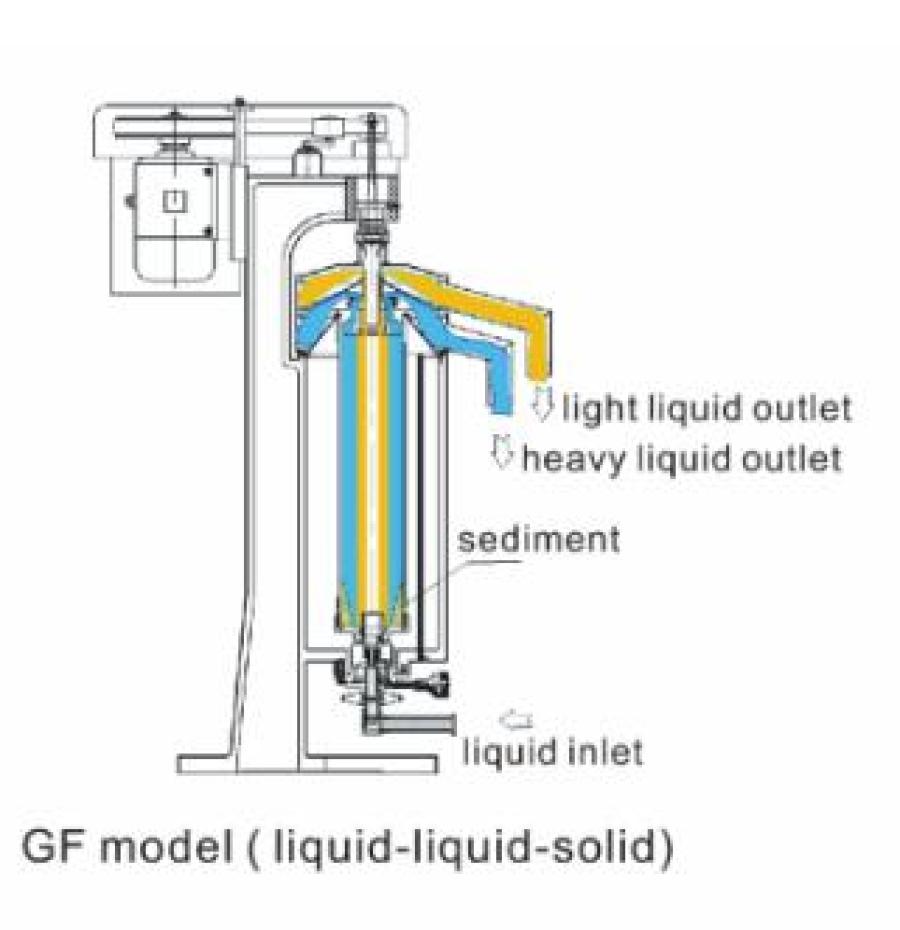
Working Principle
The mixture containing oil, water and solid impurities vertically enters the high‑speed rotating bowl through the central bottom inlet. Under strong centrifugal force, materials stratify automatically by density. The high‑density heavy liquid forms the outer layer while the low‑density light liquid forms the inner layer, which are continuously discharged through two independent top outlets respectively. Solid particles and residues are thrown and deposited on the inner wall of the bowl. When residues are fully accumulated, shut down the machine, disassemble the bowl and clean sediments manually before putting into operation again.
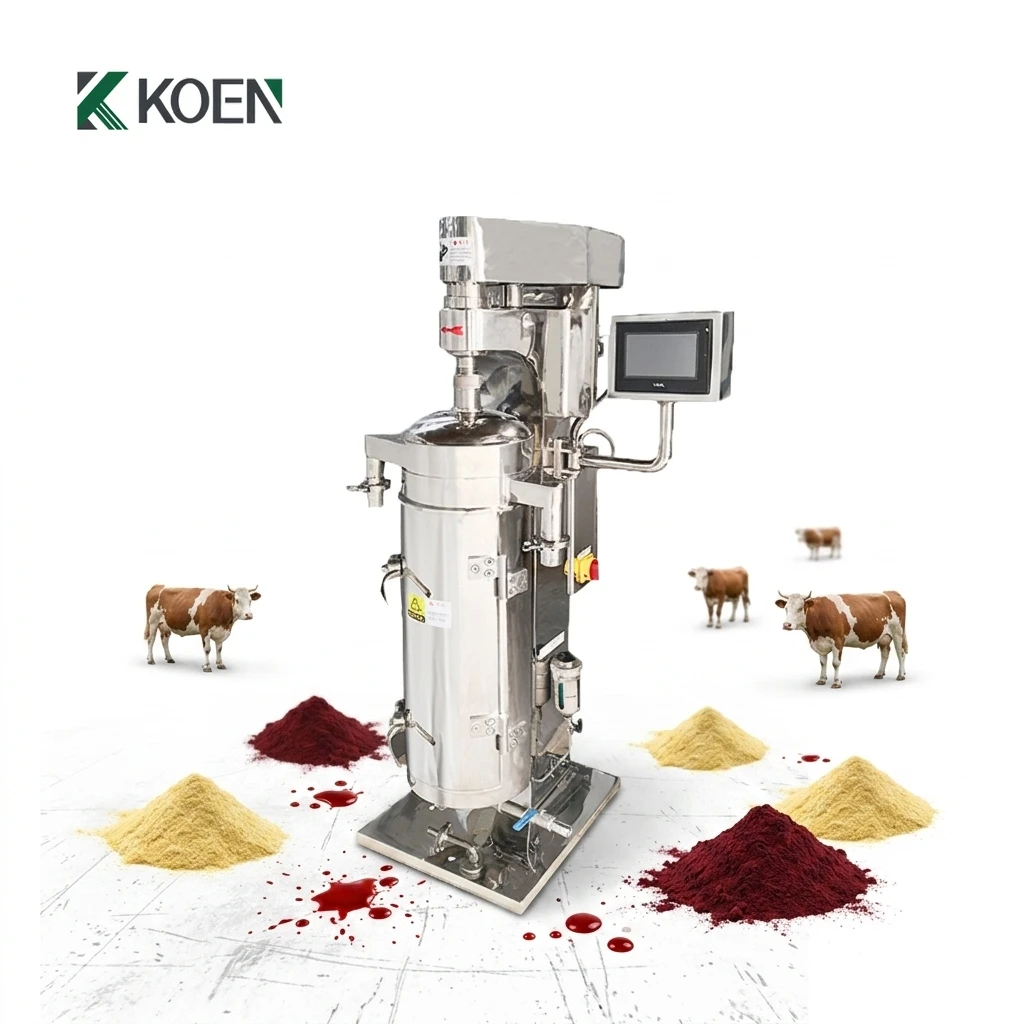
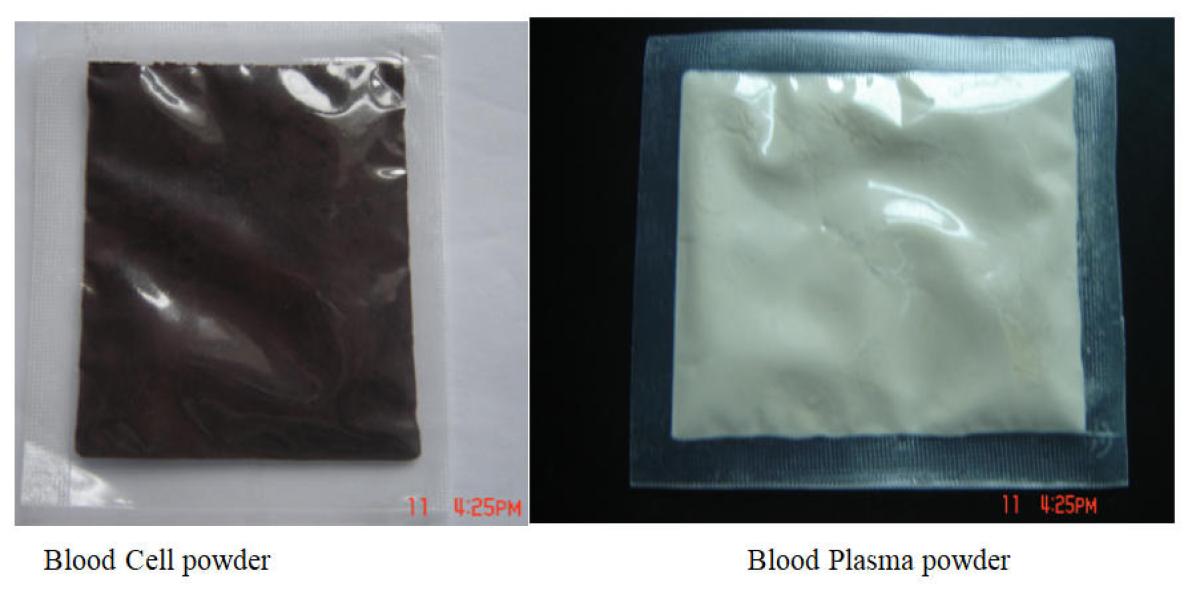
Blood powder
Spare parts/Tools
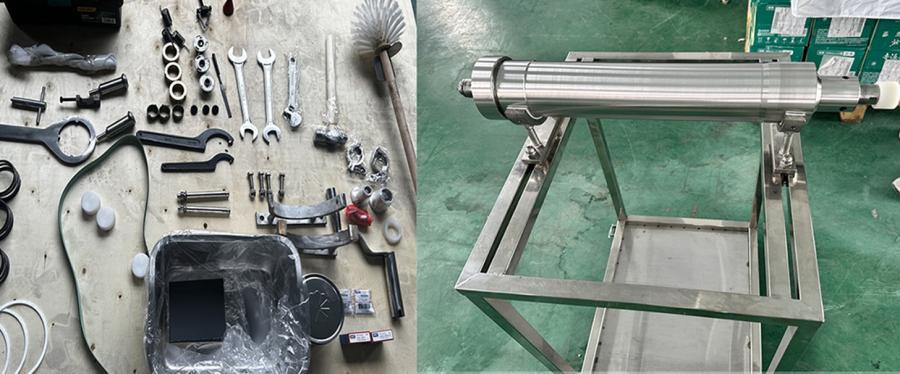
We offer 3 sets spare parts and one set tools
One movable trolley
One movable trolley
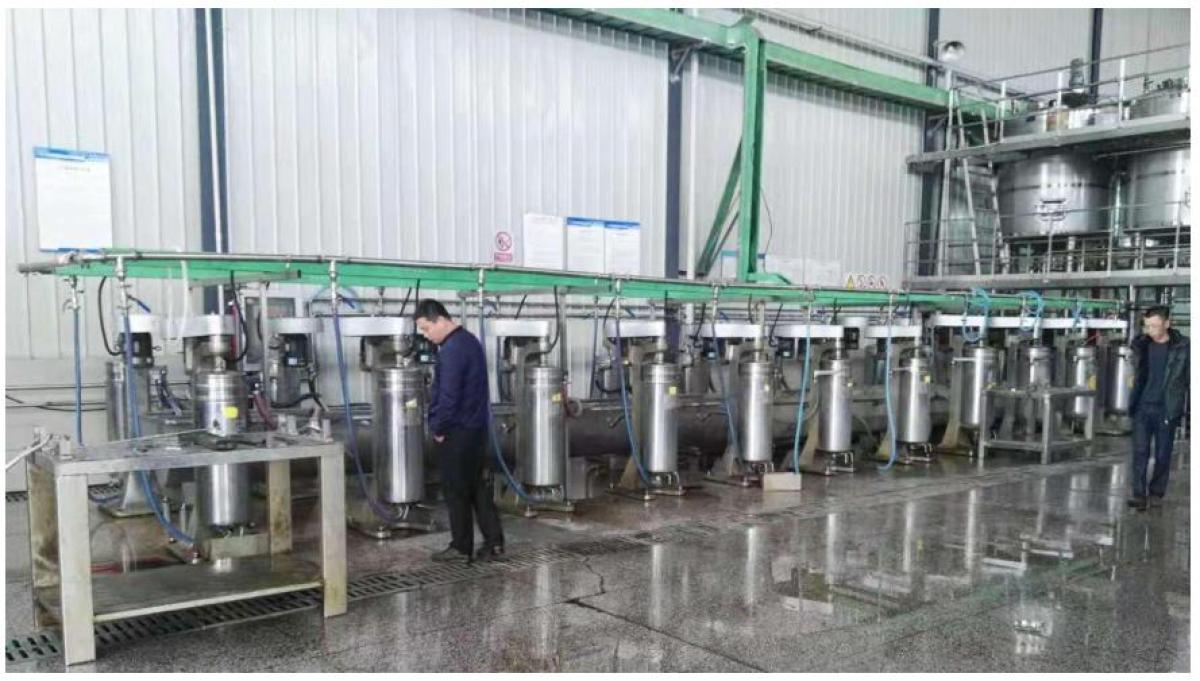
Customer's factory